रविवार, 22 जनवरी 2012

PANCHAKARMA EQUIPMENTS

PANCHAKARMA EQUIPMENTS
MASSAGE TABLE
massage table
Shirodhara Stand
shirodhara stand
Steam Dom
steam dom
Shirodhara Pots
shirodhara pot
shirodhara pot

शनिवार, 21 जनवरी 2012

Anal Abscess

Anal Abscess


An anal abscess (also known as an anal/rectal abscess, peri-rectal/peri-anal abscess, or ano-rectal abscess) is an abscess (a large pocket of infection) adjacent to the anus.

Symptoms:


The condition invariably becomes extremely painful, and usually worsens over the course of just a few days. The pain may be limited and sporadic at first, but invariably worsens to a constant pain which can become very severe when body position is changed (e.g., when standing up, rolling over, and so forth). Depending upon the exact location of the abscess, there can also be excruciating pain during bowel movements, though this is not always the case. This condition may occur in isolation, but is frequently indicative of another underlying disorder, such as Crohn's disease.

Causes:


Abscesses are caused by a high density infection of (usually) common bacteria which collect in one place or another for any variety of reasons. All abscesses can progress to serious generalized infections requiring lengthy hospitalizations if not treated.

Historically, many rectal abscesses are caused by bacteria common in the digestive system, such as E. coli.

Treatment:


Anal abscesses, unfortunately, cannot be treated by a simple course of antibiotics or other medications.

Generally speaking, a fairly small but deep incision is performed close to the root of the abscess, and Kshar-varti is applied to the wound which curates the internal wall of abscess and heals the wound in the course of time. The incision is not closed (stitched), as the damaged tissues must heal from the inside toward the skin over a period of time.

The patient is instructed to perform several 'sitz baths' per day, whereby a small basin (which usually fits over a toilet) is filled with warm water (and possibly, salts) and the affected area is soaked for a period of time.

Perianal Hematoma

Perianal Hematoma


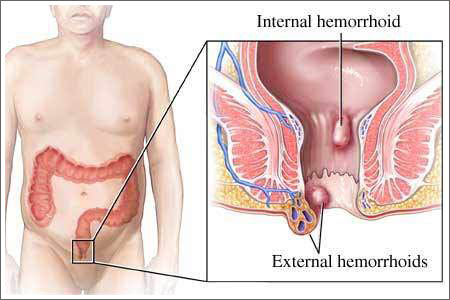
A Perianal hematoma is a type of hematoma located in, or on the border of the anus. It can be misdiagnosed as a hemorrhoid, but is sometimes referred to as an external hemorrhoid.

Causes:


Perianal hematoma is caused by the rupture of a small vein that drains blood from the anus. This rupture may be caused by heavy lifting, coughing, straining, or bicycle riding. Once the rupture has formed, blood quickly pools within a few hours and, if left untreated, forms a clot.
Symptoms:


A burst Perianal Blood Vessel causes an Perianal Hematoma, or "external haemorrhoid".

The symptoms of a perianal hematoma can present over a short period of time. Pain, varying from mild to severe, will occur as the skin surrounding the rupture expands due to pressure. This pain will usually last even after the blood has clotted, and may continue for two to four days.

बवासीर

बवासीर


बवासीर दो प्रकार की होती है - खूनी बवासीर और बादी वाली बवासीर,खूनी बवासीर में मस्से खूनी सुर्ख होते है,और उनसे खून गिरता है, जबकि बादी वाली बवासीर में मस्से काले रंग के होते है,और मस्सों में खाज पीडा और सूजन होती है, अतिसार संग्रहणी और बवासीर यह एक दूसरे को पैदा करने वाले होते है। बवासीर के रोगी को बादी और तले हुये पदार्थ नही खाने चाहिये, जिनसे पेट में कब्ज की संभावना हो,हरी सब्जियों का ज्यादा प्रयोग करना चाहिये,बवासीर से बचने का सबसे सरल उपाय यह है कि शौच करने उपरान्त मलद्वार अच्छी तरह से साफ़ करें,इससे कभी बवासीर नही होता है। इसके लिये आवश्यक है कि नाखून कतई बडा नही हो,अन्यथा भीतरी मुलायम खाल के जख्मी होने का खतरा होता है, प्रारंभ में यह उपाय अटपटा लगता है,पर शीघ्र ही इसके अभ्यस्त हो जाने पर तरोताजा महसूस भी होने लगता है,इसके घरेलू उपचार इस प्रकार से है ।

  • जीरे को जरूरत के अनुसार भून कर उसमे मिश्री मिलाकर मुंह में डालकर चूंसने से तथा बिना भुने जीरे को पीस कर मस्सों पर लगाने से बवासीर की बीमारी में फ़ायदा होता है |
  • पके केले को बीच से चीरकर दो टुकडे कर लें और उसपर चार ग्राम कत्था पीसकर छिडक दें,इसके बाद उस केले को खुले आसमान के नीचे शाम को रख दें, सुबह को उस केले को प्रातःकाल की क्रिया करके खालें, एक हफ़्ते तक इस प्रयोग को करने के बाद भयंकर से भयंकर बवासीर समाप्त हो जाती है ।
  • छोटी पिप्पली को पीस कर चूर्ण बना ले, और दो ग्राम चूर्ण एक चम्मच शहद के साथ लेने से आराम मिलता है
  • एक चम्मच आंवले का चूर्ण सुबह शाम शहद के साथ लेने पर बवासीर में लाभ मिलता है, इससे पेट के अन्य रोग भी समाप्त होते है |
  • खूनी बवासीर में नींबू को बीच से चीर कर उस पर चार ग्राम कत्था पीसकर बुरक दें, और उसे रात में छत पर रख दें,सुबह दोनो टुकडों को चूस लें, यह प्रयोग पांच दिन करें खूनी बवासीर की यह उत्तम दवा है |


  • खूनी बवासीर में गेंदे के हरे पत्ते नौ ग्राम काली मिर्च के पांच दाने और मिश्री दस ग्राम लेकर साठ ग्राम पानी में पीस कर मिला लें, दिन में एक बार चार दिन तक इस पानी को पिएं, गरम चीजों को न खायें, खूनी बवासीर खत्म हो जायेगा ।
  • पचास ग्राम बडी इलायची तवे पर रख कर जला लें,ठंडी होने पर पीस लें, रोज सुबह तीन ग्राम चूर्ण पंद्रह दिनो तक ताजे पानी से लें, बवासीर में लाभ होता है |
  • दूध का ताजा मक्खन और काले तिल दोनो एक एक ग्राम को मिलाकर खाने से बवासीर में फ़ायदा होता है |
  • नागकेशर मिश्री और ताजा मक्खन इन तीनो को रोजाना सम भाग खाने से बवासीर में फ़ायदा होता है |
  • नीम के ग्यारह बीज और छः ग्राम शक्कर रोजाना सुबह को फ़ांकने से बवासीर में आराम मिलता है |
  • कमल का हरा पत्ता पीसकर उसमे मिश्री मिलाकर खायें,बवासीर का खून आना बन्द हो जाता है |
  • सुबह शाम को बकरी का दूध पीने से बवासीर से खून आना बन्द हो जाता है |
  • प्रतिदिन दही और छाछ का प्रयोग बवासीर का नाशक है |
  • गुड के साथ हरड खाने से बवासीर में फ़ायदा होता है |
  • बवासीर में छाछ अम्रुत के समान है, लेकिन बिना सेंधा नमक मिलाये इसे नही खाना चाहिये |
  • मूली का नियमित सेवन बवासीर को ठीक कर देता है |
बवासीर क्या है ...?
============

* बवासीर आजकल एक आम बीमारी के रूप में प्रचलित है। इस रोग मे गुदे की खून की नसें (शिराएं) फ़ूलकर शोथयुक्त हो जाती हैं,जिससे दर्द,जलन,और कभी कभी रक्तस्राव भी होता है।बवासीर का प्रधान कारण कब्ज का होना है।जिगर मे रक्त संकुलता भी इस रोग कारण होती है। मोटापा, व्यायाम नहीं करना और भोजन में रेशे(फ़ाईबर) की कमी से भी इस रोग की उत्पत्ति होती है।

बवासीर दो प्रकार की होती है:--

खूनी बवासीर :-
=========

* अंदर की बवासीर से खून निकलता है इसलिए इसे खूनी बवासीर कहते हैं।

बादी-बवासीर :-
=========

* बाहर की बवासीर में दर्द तो होता है लेकिन उनसे खून नहीं निकलता है इसलिए इसे बादी-बवासीर कहते हैं।

बवासीर रोग होने के कारण :-
-------------------------------

मलत्याग करते समय में अधिक जोर लगाकर मलत्याग करना और बार-बार जुलाव का सेवन करना...

बार-बार दस्त लाने वाली दवाईयों का सेवन करना..

उत्तेजक पदार्थों का अधिक सेवन करना..

अधिक मिर्च-मसालेदार भोजन का सेवन करना..

अधिक कब्ज की समस्या होना...

वंशानुगत रोग या यकृत रोग होना...

शारीरिक कार्य बिल्कुल न करना..

शराब का अधिक मात्रा में सेवन करना..

पेचिश रोग कई बार होना..

निम्नस्तरीय चिकनाई रहित खुराक लेना...

गर्भावस्था के समय में अधिक कष्ट होना तथा इस समय में कमर पर अधिक कपड़ें का दबाव रखना...

रात के समय में अधिक जागना...

मूत्र त्याग करने के लिए अधिक जोर लगना..

* मस्से के लिये कई घरेलू ईलाज हैं,लेकिन सबसे महत्वपूर्ण और आधार भूत बात यह है कि रोगी को २४ घंटे में ४ से ६ लिटर पानी पीने की आदत डालनी चाहिये। ज्यादा पानी पीने से शरीर से विजातीय पदार्थ बाहर निकलते रहेंगे और रोगी को कब्ज नहीं रहेगी जो इस रोग का मूल कारण है।

* हरी पत्तेदार सब्जियां,फ़ल और ज्यादा रेशे वाले पदार्थों का सेवन करना जरुरी है।

Pilonidal Cyst

Pilonidal Cyst


A pilonidal cyst, also referred as a pilonidal abscess, pilonidal sinus or sacrococcygeal fistula, is a cyst or abscess near or on the natal cleft of the buttocks that often contains hair and skin debris

Symptoms:


Pilonidal cysts are quite painful, affect men more frequently than women, and typically occur between the ages of 15 and 24. Although usually found near the coccyx, the condition can also affect the navel, armpit or penis, though these locations are much more rare.

Some people with a pilonidal cyst will be asymptomatic.

Pilonidal Sinus:


A sinus tract, or small channel, may originate from the source of infection and open to the surface of the skin. Material from the cyst may drain through the pilonidal sinus. A pilonidal cyst is usually painful, but with draining, the patient might not feel pain.

Causes:


One proposed cause of pilonidal cysts is ingrown hair. Excessive sitting is thought to predispose people to the condition because they increase pressure on the coccyx region. Trauma is not believed to cause a pilonidal cyst; however, such an event may result in inflammation of an existing cyst. However there are cases where this can occur months after a localized injury to the area. Some researchers have proposed that pilonidal cysts may be the result of a congenital pilonidal dimple. Excessive sweating can also contribute to the cause of a pilonidal cyst.

The condition was widespread in the United States Army during World War II. More than eighty thousand soldiers having the condition required hospitalization. It was termed "Jeep riders' disease," because a large portion of people who were being hospitalized for it rode in jeeps, and prolonged rides in the bumpy vehicles were believed to have caused the condition due to irritation and pressure on the coccyx

Fustula in Ano (Bhagandar)

Fustula in Ano (Bhagandar)


An anal fistula, or fistula-in-ano, is an abnormal connection between the epithelialised surface of the anal canal and (usually) the perianal skin.

Anal fistulae originate from the anal glands, which are located between the two layers of the anal sphincters and which drain into the anal canal. If the outlet of these glands becomes blocked, an abscess can form which can eventually point to the skin surface. The tract formed by this process is the fistula.

Diagnosis:


Diagnosis is by examination, either in an outpatient setting or under anesthesia (referred to as EUA - Examination Under Anaesthesia). The examination can be an anoscopy.

Treatments:


There are several stages to treating an anal fistula:

Kshar-sutra Treatment:

This method is most effective non surgical method. This treatment can be done by an Ayurvedic physician. In this method medicated Kshar-sutra is applied through the fistula tract with the help of special probe and it is changed weekly. Within few weeks the fistula tract is cured. Successful rate in this treatment are tremendous. Few surgeons who are aware of this treatment are also suggesting this treatment to the patients.

Treating active infection:

Some patients will have active infection when they present with a fistula, and this requires clearing up before definitive treatment can be decided.

Fissure in Ano (ANAL Fissure)

Fissure in Ano (ANAL Fissure)


Anal fissures are a natural crack or tear in the skin of the anal canal. Anal fissures may be noticed by bright red anal bleeding on the toilet paper, sometimes in the toilet. If acute they may cause severe periodic pain after defecation but with chronic fissures pain intensity is often less. Anal fissures usually extend from the anal opening and are usually located posteriorly in the midline, probably because of the relatively unsupported nature of the anal wall in that location. Fissure depth may be superficial or sometimes down to the underlying sphincter muscle.

Causes:


Most anal fissures are caused by stretching of the anal mucosa beyond its capability. For example, anal fissures are common in women after childbirth, after difficult bowel movements, and in infants following constipation.

Superficial or shallow anal fissures look much like a paper cut, and may be hard to detect upon visual inspection, they will generally self-heal within a couple of weeks. However, some anal fissures become chronic and deep and will not heal. The most common cause of non-healing is spasming of the internal anal sphincter muscle which results in impaired blood supply to the anal mucosa. The result is a non-healing ulcer, which may become infected by fecal bacteria.

Be advised that anal fissures can be confused with a rare cancer such as anal cancer. It is wise to visit your family doctor or a general surgeon if you experience rectal bleeding.

Prevention:


For adults, the following may help prevent anal fissure:
  • Avoiding straining when defecating. This includes treating and preventing constipation by eating food rich in dietary fiber, drinking enough water, occasional use of a stool softener, and avoiding constipating agents such as caffeine. Similarly, prompt treatment of diarrhea may reduce anal strain.
  • Careful anal hygiene after defecation, including using soft toilet paper and/or cleaning with water.
  • In cases of pre-existing or suspected fissure, use of a lubricating ointment (e.g. hemorrhoid ointments) can be helpful.
  • In infants, frequent nappy/diaper change can prevent anal fissure. As constipation can be a cause, making sure the infant is drinking enough fluids (i.e. breast milk, proper ratios when mixing formulas. NOTE: See physician before giving infants any fluids outside breast milk and/or formula) may thus help avoid fissures. In infants, once an anal fissure has occurred, addressing underlying causes is usually enough to ensure healing occurs.

Treatment:


Kshar-sutra application at fissure region along with sentinel pile shows dramatic results. Sentinel pile sheds off like pile mass and the wound heals within a week.

Non-surgical treatment is recommended as first-line treatment of acute and chronic anal fissures. Customary treatments include warm sitz baths, topical anesthetics, high-fiber diet and stool softeners.